The immense, copper-hued walls of the Barranca del Cobre (Copper Canyon) in Chihuahua are a place of ancient silence and breathtaking beauty. But for the Castillo family, this majesty became the backdrop for a tragedy that would span six agonizing years. What began as a tender farewell to a father’s fading memory transformed into a mystery that gripped the region—a story of absolute sacrifice and a promise that outlived the mind itself.
In October 2013, 26-year-old Elena Castillo made a decision driven by love. Her father, 61-year-old Roberto, a retired artisan who knew the Sierra like the back of his hand, had been diagnosed with early-onset dementia. The man who had taught her to see the beauty in the world through photography was slowly disappearing. His memory was fragmenting; the streets of Chihuahua City were becoming a maze to him, and familiar faces were turning into strangers.
Before the “neblina” (fog) completely claimed him, Elena wanted to give him one last gift: a trip to the canyons where they had spent their happiest family vacations.
They left Chihuahua City on a crisp autumn morning. Security footage at a gas station in Cuauhtémoc captured their last known moments together. Elena looked focused and calm, filling the tank of their blue SUV. Roberto sat in the passenger seat, looking down at an old paper map with a confused expression. It was a poignant snapshot of a role reversal: the daughter becoming the guardian.
They parked their vehicle near a remote trailhead, intending to hike toward a scenic lookout to photograph the sunset. They walked into the vast wilderness of the Sierra Tarahumara and simply vanished.
When they failed to return, a massive search operation was launched. For days, Protección Civil, volunteers, and local Tarahumara guides scoured the treacherous ravines. But the Barranca is unforgiving; its depths are a labyrinth of stone and shadow. The search yielded nothing. No clues, no tracks, no answers. The case went cold, and the Castillo file was shelved, leaving a void in the hearts of their remaining family.
Six years of silence passed. The seasons changed, rains washed over the canyon walls, and the world moved on. Then, in August 2019, the silence was broken.
A team of geologists surveying a remote sector for potential mining risks spotted something unnatural at the bottom of a deep, narrow gorge. It was the faded color of synthetic fabric, clashing against the red stone. Upon descending into the difficult terrain, they made a somber discovery. There, amidst the rockfall debris, lay the remains of Elena Castillo.
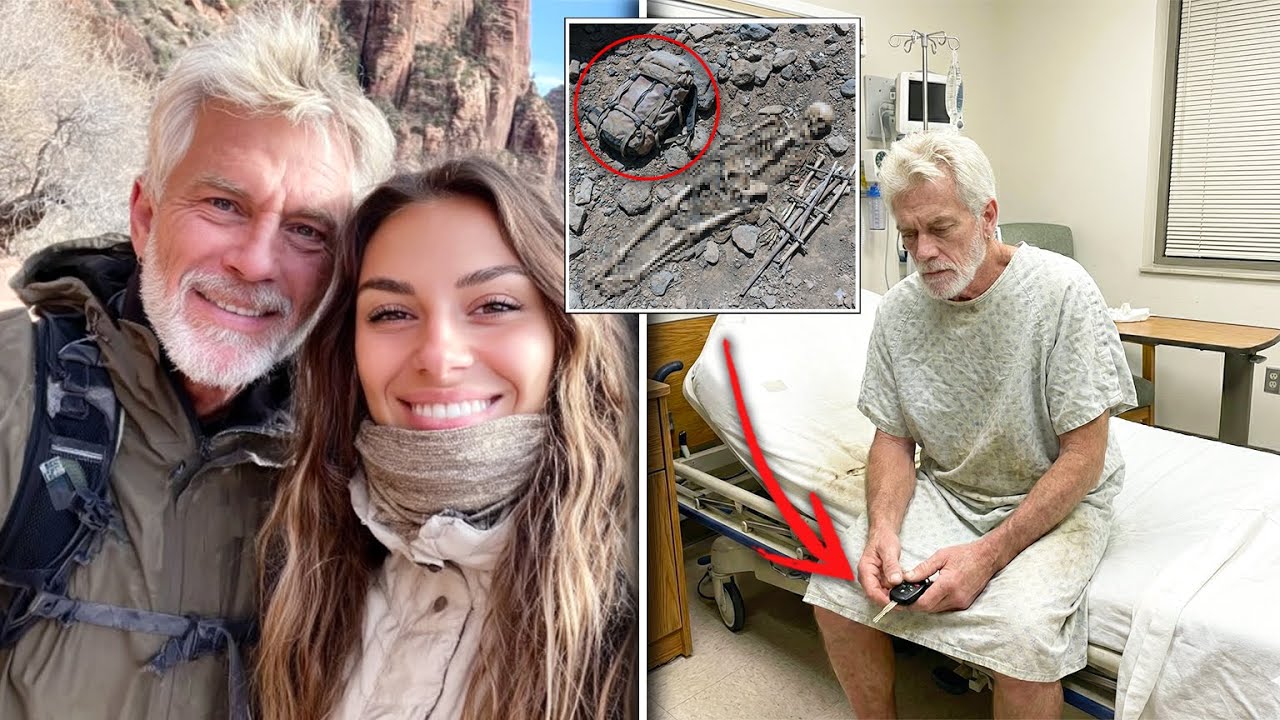
Identification was confirmed through dental records and personal effects found on site, including her camera bag. However, the discovery raised more questions than it answered. Elena was there, but Roberto was not. There was no sign of him—no clothing, no shoes, nothing to suggest he had perished alongside her.
The absence of the father cast a dark shadow over the investigation. Had his confusion led to violence? Had he abandoned her? The scene at the bottom of the gorge told a different story, one of survival and immense grit.
Forensic experts analyzing Elena’s injuries determined she had survived the initial fall. She had suffered severe fractures to her legs and pelvis—injuries that made climbing out impossible but were not immediately fatal. In a display of incredible fortitude, Elena had used her camera straps and sturdy branches to fashion a makeshift splint for her broken leg. She had fought to stay alive.
But two critical items were missing from her backpack: her heavy fleece jacket and her car keys.
Why would a critically injured woman, facing the freezing temperatures of the Sierra nights, part with her only source of warmth? And why the keys?
The answer arrived from hundreds of kilometers away, in a revelation that linked the canyon tragedy to a humble state care facility in the neighboring state of Sonora.
For six years, a man known only as “Don Nadie” (Mr. Nobody) had been a resident of a psychiatric center. He had been found wandering a highway near the state border just weeks after the Castillo disappearance. He was dehydrated, disoriented, and completely unable to recall his name or history. Diagnosed with severe retrograde amnesia and dementia, he lived in a perpetual state of waiting.
Staff at the facility called him “Don Reloj.” He was obsessed with time. He would stare at the wall clock, check his wrist, and stand by the window for hours, his eyes fixed on the dusty road outside. He told nurses in a hushed voice, “I have to be there,” and “She’s coming back.”
There was one other peculiarity. He guarded a small, yellowed object with ferocious intensity. It was an old car keychain.
When a sharp-eyed police researcher noticed the physical similarities between the missing Roberto Castillo and the Sonoran “Don Nadie,” detectives traveled to the facility. The physical resemblance was undeniable, though the sun and time had aged him. But the true confirmation came from that plastic keychain.
Detectives took the object to the police corralón (impound lot) where the Castillo’s dusty SUV had sat under a tarp for six years. They pressed the worn button. The locks clicked open.
The puzzle pieces finally snapped together, revealing a narrative so tragic it stunned the investigators.
Experts reconstructed the final hours in the canyon. Elena had fallen, sustaining debilitating injuries. Realizing she could not climb out, she made a selfless calculation. She knew the temperature would drop below freezing. She knew her father, confused and frightened, would die without help.
She gave her father her warm fleece jacket to protect him. She handed him the car keys. She likely gave him simple, repetitive instructions, the kind his mind could grasp: “Take the keys, Papá. Go to the car. Get help. Wait by the road.”
Roberto, driven by his daughter’s command, managed to climb out of the gorge—a feat of adrenaline and obedience. But once he was alone in the vast wilderness, the fragile thread of his memory snapped. The “who” and the “why” evaporated, leaving only the imperative: Wait. Go to the road.
He walked until he was exhausted, eventually ending up on a highway miles away, crossing state lines, where he was found as an unknown drifter. He had forgotten his name, his home, and even his daughter’s existence. But the command to wait was burned into his subconscious.
Elena passed away alone in the dark canyon, having sacrificed her warmth and her chance of rescue to give her father a fighting chance.
The case was officially closed as an accidental tragedy. Elena’s remains were brought home to Chihuahua for a quiet mass. Roberto remained in the facility in Sonora; moving him would have been too traumatic for his fragile state.
His condition has deteriorated; he rarely speaks now. Yet, every single morning, he continues his ritual.
He walks to the chair by the main entrance. He sits with a slight forward lean, watching the automatic doors open and close. In his hand, he tightly grips the replacement keychain the nurses gave him. He doesn’t know who Elena was. He doesn’t know that she is gone. He only knows that he made a promise.
In a world where his mind has lost everything, his heart is still keeping its word. He is still waiting by the road.