The NBA isn’t just changing — it’s transforming in ways that even longtime fans struggle to fully grasp. Night after night, the evidence keeps piling up: the league you grew up watching is gone, replaced by a faster, smarter, more unpredictable version of basketball that has pushed every limit of athleticism and strategy. Whether you love the direction or fear where it’s heading, one thing is clear: the NBA will never look the same again.
The transformation has happened so rapidly that many didn’t even notice it beginning. A decade ago, the league was still defined by physical bruisers, mid-range matchups, and slow, methodical offenses. Today’s NBA looks like it’s played on fast-forward. Every possession is a math equation, every shot is a calculated investment, and every young player entering the league is more skilled at 19 than veterans used to be at 28. The pace hasn’t just quickened — the mindset has shifted entirely.
One of the most striking changes is the rise of positionless basketball. The concept once sounded like a creative experiment, but now it defines nearly every team. Guards rebound like centers. Centers shoot like guards. Wings initiate offense like point guards. Coaches no longer build around roles — they build around versatility. And it’s reshaping the way teams draft, develop, and deploy talent.
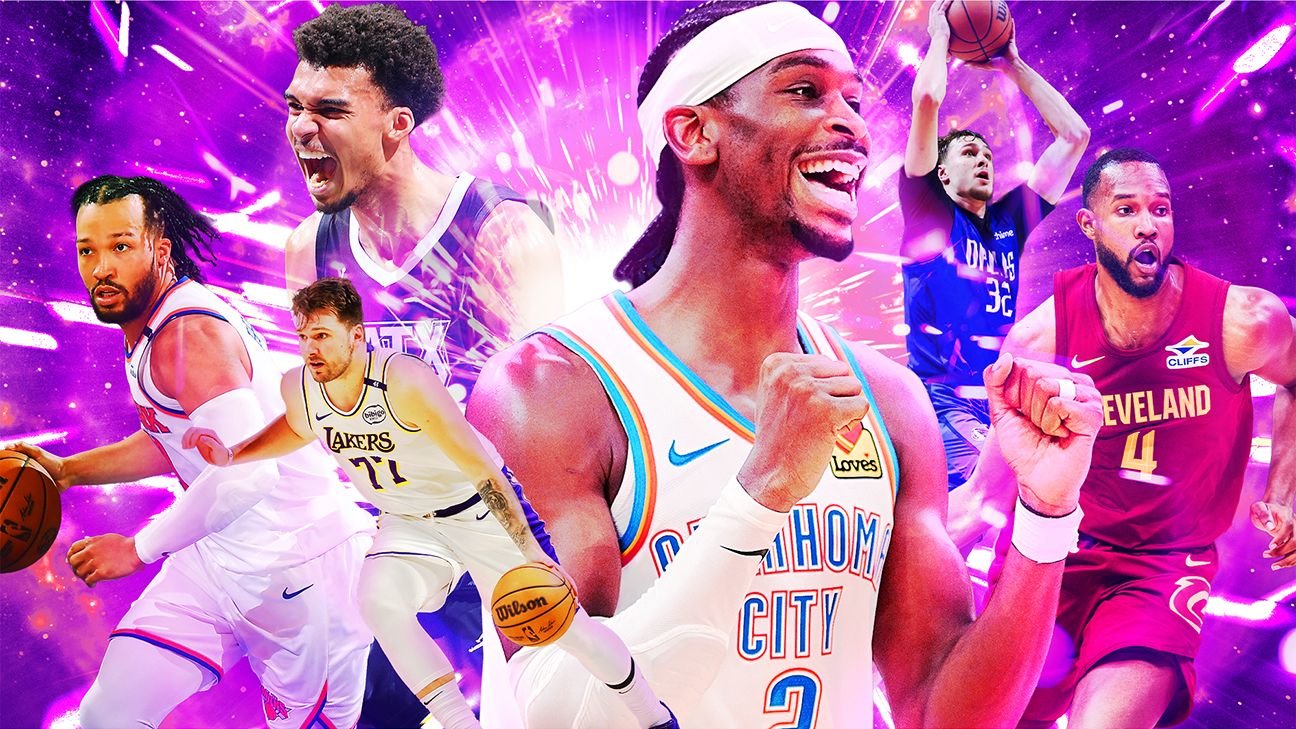
Just look at the modern superstar. Players like Nikola Jokić, Giannis Antetokounmpo, and Victor Wembanyama don’t fit into old categories. They break every rule that used to define basketball positions. Jokić is a seven-foot point guard. Giannis is a locomotive who plays every spot on the floor. Wembanyama is something entirely new: a shot-blocking big who moves like a guard and shoots like a wing. The NBA hasn’t fully figured out how to defend these hybrids — and it may never catch up.
Three-point shooting is another revolution that continues to expand. What Stephen Curry started has become the league’s universal language. Teams shoot threes from distances that once would’ve gotten players benched. Now they’re encouraged. Expected. Strategic. The willingness to stretch defenses farther and farther has reorganized how offenses operate. The paint is more open than ever, driving lanes are wider, and even centers are spacing the floor as mandatory contributors.
This shift has also warped defensive schemes. The standard playbook for defense — protect the paint, force long shots — no longer works. Coaches now must defend the entire floor, from the rim to 30+ feet away. The best defenders aren’t just rim protectors; they’re players who can switch, sprint, rotate, and read an offense in real time. Defense has become more mental, more reactive, more collective.
Analytics, once a niche resource, now sits at the core of every major NBA decision. Teams don’t guess anymore — they model. They simulate. They track every movement, every angle, every advantage. The league’s smartest organizations aren’t just the ones with the best players… they’re the ones best at interpreting information. The difference between contenders and pretenders frequently comes down to who truly understands the math behind the game.
But analytics alone didn’t change the sport. Players evolved to match the data. Young athletes now come into the league with high-level ball-handling, step-back shooting, advanced footwork, and elite conditioning already baked into their game. From high school to college to the pros, development programs teach a brand of basketball entirely different from past generations. The fundamentals haven’t vanished — they’ve been upgraded.
Even pace and spacing have taken on new meaning. Today’s teams are obsessed with pushing the ball, increasing possession count, and attacking before defenses can organize. It’s a style that rewards creativity, IQ, and fearlessness. The fastest, most dynamic offenses often belong to the youngest teams — a clear sign that the NBA’s next era is being shaped by players who grew up studying the modern game, not adapting to it.
The new NBA is also more global than ever. International stars aren’t just supplementary — they’re headliners. Jokić, Luka Dončić, Embiid, Giannis, SGA, Wembanyama: the MVP race and All-NBA selections are dominated by players from outside the United States. The league’s offensive concepts now blend European spacing, African athleticism, American creativity, and global adaptability. The old “American style vs international style” debate is irrelevant — today’s game is a fusion.
Off the court, the culture around the NBA has evolved as intensely as the on-court product. Social media has accelerated everything — reactions, narratives, controversies, trends. One highlight can launch a player into stardom overnight. One mistake can spark a global conversation. The league operates in real time, under constant spotlight, shaping how players manage pressure and image.
Front offices have adapted too. Roster building has turned into a science. Teams value shooting, switchability, length, and decision-making more than ever. Superstars are still essential, but depth, chemistry, and strategic flexibility have become equally crucial. A team without shooters is unplayable. A team without defenders is incomplete. A team without versatility is outdated.
Coaching has also entered a new age. The best coaches aren’t just tacticians — they’re programmers. They adjust game plans possession by possession. They use data to optimize substitution patterns and exploit matchups. They’re tasked with managing egos, maintaining energy, and keeping pace with the league’s endless creativity. The job has never been harder, and the expectations have never been higher.
The physicality of the game has changed as well. While fans often claim defense is “gone,” the truth is more nuanced. Defense hasn’t become weaker — offense has simply become more advanced. Modern defenders must guard five positions, contest deep threes, protect the rim, and avoid fouling all at once. What used to be a straightforward task is now a puzzle with shifting pieces.
Technology is pushing the evolution even further. Wearables track biomechanics. Cameras capture every inch of a court. AI analyzes tendencies at speeds humans can’t match. Teams know how fast a player accelerates, how efficiently they plant their foot, how their shot arc varies by fatigue level. The line between sport and science has blurred entirely.
Even the fans are changing with the game. Younger audiences appreciate pace, skill, and scoring. Older fans long for physicality and structure. The league’s challenge is balancing entertainment with tradition — but the trend is clear: the NBA is leaning into the future.
And that future includes new rules, new tournament formats, and possibly new teams. The In-Season Tournament showed the league is willing to experiment. Expansion feels inevitable. The NBA is not just evolving — it’s expanding, reshaping its identity in real time.
But the biggest catalyst for change is simple: talent. The skill level of the modern NBA is unprecedented. There are no “simple” matchups anymore. No nights off. No easy defensive assignments. Bench players are more skilled than former starters. Role players are specialized weapons. Rookies come in ready to contribute immediately. The talent pool is overflowing.
When you combine innovation, global influence, analytics, technology, and the modern athlete, the result is exactly what we’re seeing today: a league that looks nothing like the one from even five years ago.
This is the NBA’s evolution. And it’s happening faster than anyone can fully understand.
Maybe you love it. Maybe you miss the old days. Maybe you’re still deciding how you feel.
But one truth is undeniable:
You’re witnessing the NBA change in real time — and the game will never be the same again.